Research & Innovation at UDSM
Advancing Knowledge, Transforming Lives Through Research Excellence
Advancing Knowledge, Transforming Lives Through Research Excellence
The University of Dar es Salaam (UDSM) is actively engaged in a wide array of research projects aimed at addressing critical societal needs and contributing to global knowledge. UDSM's research initiatives are organized through various colleges, schools, and specialized research centers, reflecting the university's comprehensive approach to research and innovation.
Strategic partnerships driving innovation and sustainable development
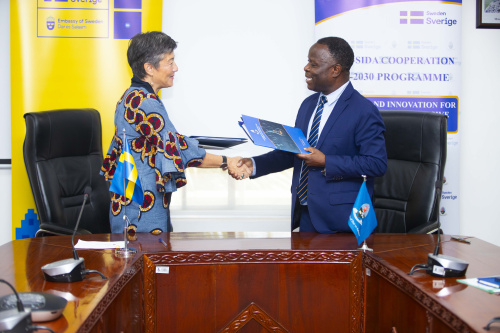
The UDSM is guided by its Vision 2061 to its rightful role in facilitating the BRN. As part of that effort, this proposal was developed in response to the Sida call of August 2014 for enhancing Tanzania-Sweden research partnerships 2015-2020 and is aimed at facilitating the UDSM aspirations "Towards Enhanced Sustainability of Strategic Research and Innovation Systems for Inclusive Development in Tanzania."
Taking full advantage of the various achievements from earlier support from Sida and other development partners, the overall objective is to generate sufficient analytical capacity and research-based knowledge and technological innovations with appropriate and immediate valuable outcomes to relevant stakeholders (policymakers, industry, civil society, etc.) in addressing the problem of poverty and promoting sustainable and inclusive development.
Sustainability measures include the enhancements of analytical capacities (through the training of 64 PhDs, 36 Masters, and 20 Postdocs) and research environment (via the establishment of 3 new research centres and strengthening 2 existing ones) for driver sector research. With UDSM outputs eventually feeding into the Tanzania University Network, the proposed capacity strengthening measures would also improve our youth participation at higher levels of education (especially for females), hence improve the percentage of highly skilled workers that so far are insufficient (3%).
The programme consists of 12 sub-programmes, 10 of which are research programmes and 2 are supporting programmes focused on strengthening research management and access to research information at UDSM.
Addresses problems of over-harvesting, declining fish stocks and diversity, and environmental changes.
Researchers work in close collaboration with the local communities of fisher folks and their emerging enterprises will address the unavailability of reliable seed, lack of genetic management and poor hatchery procedures thus degrading the performance of farmed species through inbreeding, genetic drift and uncontrolled hybridization. They also intend to assess and recommend technologies suitable for maintaining the integrity of biologically rich environments and minimize impacts, reduce post-harvest losses, assess and recommend legal and policy environment to promote ecosystem approach to fisheries management and aquaculture development.
Multidisciplinary approach focusing on agroforestry, peri-urban agriculture, and crop breeding.
With a multidisciplinary approach, focuses on research in agroforestry, peri-urban agriculture, crop breeding, diseases control, dairy farming and environmental management for improved Food Security.
Develops cost-effective diagnostics and uses natural products for new drug development.
Attempts to develop cost-effective diagnostics and use plant and microbial natural products for development of new drugs to combat non-communicative diseases as well as contributing to food security by training researchers in mushrooms endophytic fungi and lichens in strong public-private partnership bringing discovery to the industry.
Focused on smart grid technologies and sustainable energy solutions.
Engendering Agribusiness Entrepreneurship for inclusive development.
Research initiatives focused on water and agricultural technologies.
Addressing water resource management and sustainability challenges.
Increasing competence in Mathematics at Higher Education level in Tanzania.
Addresses the general need for increased competence in Mathematics at a general level in Tanzania, but with focus on Higher Education (HE). Basic Science, Technology and Innovation (BSTI) play a major role in the socio-economic development of any country. Capacity building of human resource in BSTI is therefore vital. The advancement of BSTI and related research highly depends on mathematical knowledge and competencies in problem solving.
Research on sustainability of natural and cultural tourism resources.
Will carry out research on: (1) the sustainability of natural and cultural tourism resources for inclusive development; (2) community involvement in the country's tourism planning and policies and their influence on local content strategies, green growth and innovations; (3) innovations and entrepreneurship in the private sector in tourism as pathways to sustainable growth and inclusive development; and (4) Tourism resource efficiency, social inclusiveness and conservation for economic growth.
Innovative research initiatives across UDSM departments
Information Systems and Digital Innovations research group (ISDIRG) deals with ICT-related research and its application in various sectors such as Health, Business, Water, Road Safety, Agriculture, etc. Innovation is also an important emerging field as organisations are increasingly dependent on ICT to improve operations, facilitate processes and gain competitive advantages.
Dr Mathew Mndeme - Co-coordinator
mathewmndeme@udsm.ac.tz
+255 788 835 883
Dr Masoud Mahundi - Co-coordinator
mmahundi97@gmail.com
+255 713 832 252
Weekly meetings - Contact coordinators for schedule and venue
The Software Engineering research group conducts cutting edge research and innovation in Software Engineering, focusing on national, regional, and global Software Engineering problems. Apart from theoretical aspects of Software Engineering, the group has special interests in practical challenges facing software engineers in the industry.
Group Meetings: Every Friday from 12:00 PM to 1:00 PM
Research seminars and PG presentations every other Friday
The iGRID Research Project is focused on different aspects that enable smart autonomous microgrids. Researchers at different levels are working on developing solar-based power solutions that are more efficient, reliable and autonomous than existing solutions.
Development of smart autonomous microgrid systems capable of serving off-grid communities of 10-100 households with 48V DC solar-driven power that can be integrated into high voltage AC/DC main grid when available.
Deploying smart microgrid with autonomous distributed system using agent-based distributed control for solar systems integration. Focus on IoT through provision of solar driven DC microgrid of up to 48V DC.
Designing and implementing secure and robust communication systems based on IoT technologies to support smart 48V DC solar-driven microgrids, enabling efficient power distribution management.
The iGRID research team consists of MSc, PhD and Post Doc researchers from The Royal Institute of Technology (KTH) in Sweden and The University of Dar-es-Salaam in Tanzania.
Prof Nerrey Mvungi - Project Manager and Principal Investigator
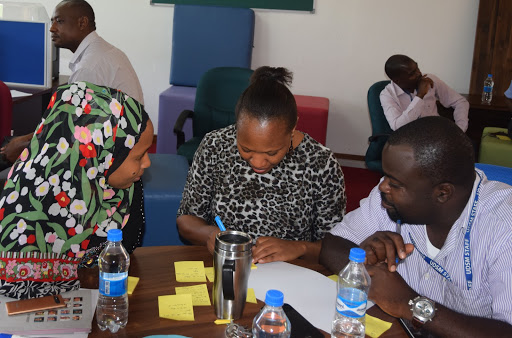
The Youth For Children (Y4C) Innovation Hub is a convening and training space to promote child rights and invest in open innovation by young people that contribute to the achievement of the Sustainable Development Goals.
The Y4C hub is housed at the University of Dar es Salaam College of ICT and was established in collaboration between UDSM and UNICEF Tanzania.
The project includes students and several CoICT lecturers serving as mentors.
Dr Hellen Maziku
The research project "Developing EDucation with Input from CoordinATED research students (DEDICATED)" is a joint collaborative project funded by Norwegian Directorate for Higher Education and Skills through Norwegian Partnership Programme for Global Academic Cooperation (NORPART). It focuses on building capacity in Health Information Systems (HIS) and Health Informatics (HI) within the partner countries.
Dr Honest C. Kimaro
Principal Investigator & Project Coordinator
Dr Jimmy T. Mbelwa
Co-Principal Investigator & Project Administrator
Dr Masoud H. Mahundi
Co-Principal Investigator
Dr Wilfred F. Senyoni
Co-Principal Investigator
Are you interested in contributing to cutting-edge research at UDSM? Join our research community and make an impact on society.